Modular Blockchains vs Monolithic Chains: What Builders Should Choose in 2026
modular blockchain explained used to be a niche topic for protocol researchers. In 2026 it is a conversation every serious builder has, because the choice between modular and monolithic designs shapes how apps scale, how they inherit security and how much control teams keep.
The debate is no longer just theory. Real networks now embody both approaches, and tools for deploying rollups, picking data availability layers and benchmarking modular vs monolithic blockchains are available to teams that are still small and fast moving.
What Modular Blockchain Explained Means in 2026
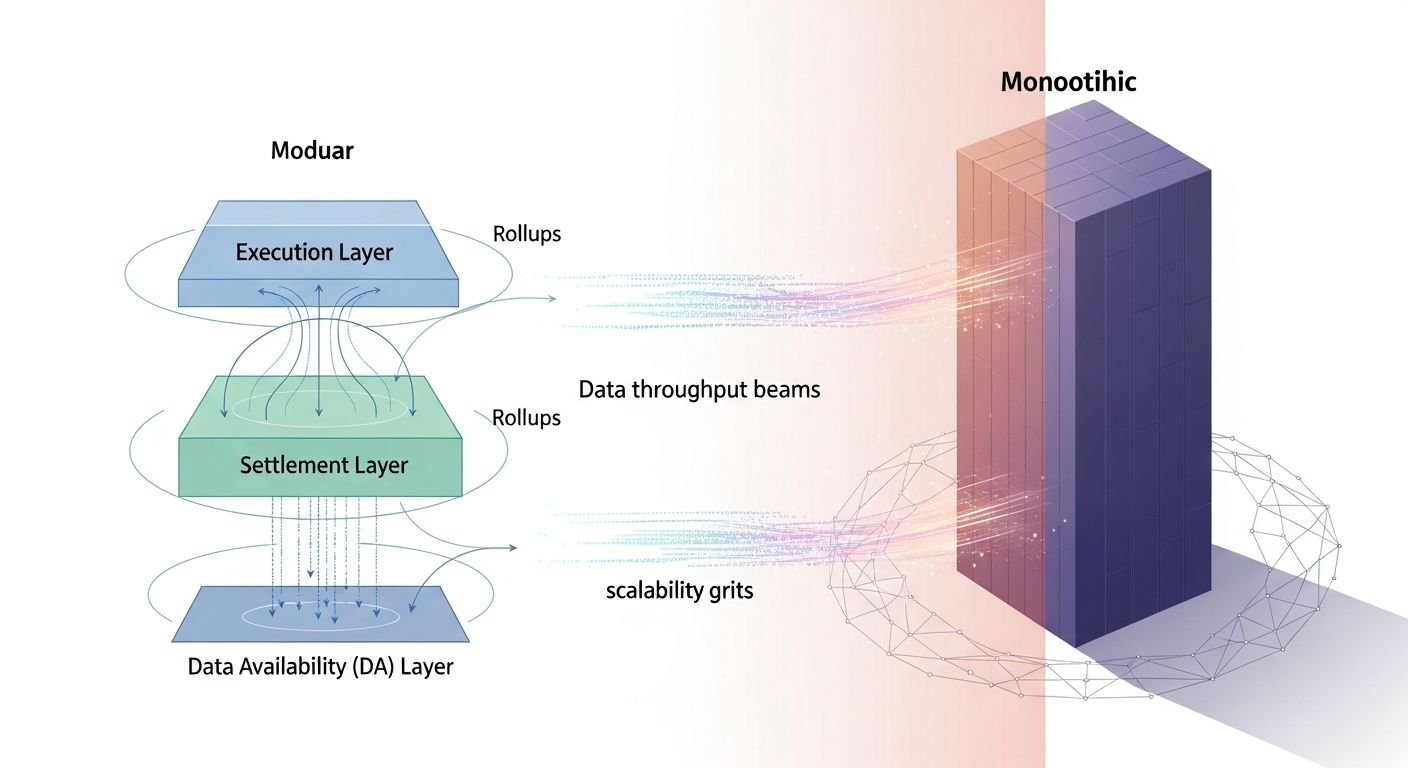
Modular blockchains break the classic chain into separate layers that specialise in different jobs. One layer focuses on consensus and security, another on execution, another on data availability. Applications can mix and match those pieces instead of relying on a single chain that tries to do everything.
In contrast, monolithic chains handle execution, consensus and data availability in one tightly integrated system. Solana is the best known modern example. It aims to deliver high throughput and low latency by keeping the full stack under one design and one set of validators.
The modular blockchain 2026 landscape is defined by frameworks that let teams launch their own execution environments, post data to shared availability layers and borrow security from a stronger base chain without building every component themselves.
How Modular and Monolithic Blockchains Differ in Practice
The difference between modular and monolithic designs becomes most obvious when you look at how they scale, handle upgrades and serve different kinds of applications.
Monolithic chains: tight integration, strong single environment
Monolithic chains like Solana provide a single global state machine. Transactions flow into one environment, and the chain works hard to process as many as possible with as little delay as possible. The upside is simple mental models and shared liquidity.
For builders, this means excellent performance when the chain is healthy and strong composability with other apps on the same network. The trade off is that all workloads compete for the same blockspace. Spikes in one sector, such as meme trading or NFT mints, can stress the whole system.
Modular stacks: rollups, data availability layers and shared security
Modular stacks take a different path. Execution happens on separate rollups or app chains, while a base layer handles consensus and often settlement. Then data availability layers store the data needed to prove and reconstruct state without forcing every node to process every transaction in real time.
This is the world of rollups vs solana style designs. A rollup on Ethereum or another base chain can tune its own fee markets, upgrade schedule and features while still leaning on a shared security pool. Data availability systems such as dedicated DA chains or Ethereum blobs give rollups more room to grow without overloading the main chain.
Monolithic chains optimise a single city, modular systems build many connected districts. Builders need to decide whether they want to live in the main city or shape their own district from day one.
Benefits and Trade Offs for Builders
From a builder perspective, modular and monolithic options both come with real strengths. The best choice depends on the app, the target users and the team’s long term plans.
Monolithic chains give immediate access to existing users and liquidity. Launching a new DeFi app, NFT marketplace or consumer product on a busy monolithic network means tapping into wallets, tooling and communities that already know how to interact with that chain.
Modular approaches give more control. A team can choose execution environment, data availability layer, fee model and even which assets to treat as native. That flexibility is useful for complex apps, regulated regions or products that need predictable performance even during peak usage elsewhere.
If your main constraint is finding users fast, monolithic networks have the edge. If your main constraint is shaping the environment around your app, modular setups usually win.
Key Risks and Design Traps
Both styles carry risks that often show up later in a project’s life, not on launch week. Builders who think about those risks early have a better chance of avoiding expensive migrations.
On monolithic chains, congestion is the obvious issue. A successful sector can make it hard for other apps to deliver a smooth experience. Fee spikes, failed transactions and slow confirmations all affect user trust. Teams that need guaranteed low fees for their users may find this limiting.
On modular stacks, fragmentation risk appears. Liquidity and users can spread across many rollups, each with slightly different rules and assets. Bridging becomes central to the user experience, and builders need to think about how cross chain flows and security assumptions will work in practice.
Data availability choices also matter. A cheaper DA layer can help margins in the short term but may come with a different security profile than the base chain. Builders have to be honest about what guarantees they are really offering end users.
How Builders Can Evaluate Modular Blockchain 2026 Options
Evaluating options starts with a clear picture of the application. A high frequency trading venue with strict latency and uptime needs is different from a social app with lighter settlement requirements or a game that can tolerate brief delays.
Teams should ask which parts of the stack they want to own. Running an app on an existing L2 is low friction, while launching a custom rollup or app chain adds operational overhead but buys more control. Shared sequencing, custom sequencing and sovereign rollup models each land in different places on that spectrum.
Tooling and ecosystem support around each modular framework is another key factor. Frameworks that provide smooth deployment flows, strong monitoring, easy upgrades and clear documentation reduce the burden on small teams that do not want to become infrastructure companies.
Where the Modular vs Monolithic Debate Is Heading
The modular blockchain explained movement does not aim to erase monolithic chains. The likely outcome is a blended landscape where high performance monolithic networks and modular stacks both thrive, each serving different use cases.
Solana style systems will continue to attract apps that benefit from a single fast environment with deep composability. Modular ecosystems will attract teams that want tailored execution, fine tuned economics and the ability to plug into specific data availability layers.
Over time, better bridging, shared liquidity layers and unified wallets can make the distinction feel less sharp to end users. Builders will still care deeply about the trade offs, but many users will simply see responsive apps that settle onto different back ends.
Conclusion
modular blockchain explained is really a question about control, scale and responsibility. Modular designs hand builders more switches to flip and more pieces to configure. Monolithic chains offer a simpler story at the cost of sharing more constraints with everyone else.
Teams that are honest about their needs, their appetite for running infrastructure and the expectations of their users can pick an approach that fits. That decision shapes not only how apps feel on day one but how they grow and survive across market cycles.
FAQ
Should a new app in 2026 launch on an existing L2 or its own rollup
Most early stage teams are better off using an existing L2 or monolithic chain to find product market fit. Once usage and requirements are clear, migrating to a custom rollup or app chain becomes easier to justify.
Is Solana considered modular or monolithic
Solana is generally seen as a monolithic chain. It handles execution, consensus and data availability in one tightly integrated system, which is part of how it delivers high throughput.
Do modular blockchains always offer lower costs
Modular designs can unlock more flexible cost structures, yet actual fees depend on demand across the stack and choices around data availability. It is important to look at real usage data and projected volumes rather than assuming modular always means cheaper.