AI Agents in Crypto: The Autonomous Future of Finance
The crypto landscape is shifting from human-led execution to a world of autonomous, intelligent software. AI agents in crypto represent this new frontier—programs that perceive, decide, and act within the blockchain ecosystem with minimal human intervention. They’re not just tools you operate; they’re digital entities you delegate to.
These agents are moving beyond simple scripted bots. They leverage large language models and machine learning to interpret complex market data, interact directly with smart contracts, and execute multi-step strategies. The result is a more dynamic, responsive, and scalable approach to managing crypto assets and operations.
What AI Agents Mean in 2026
By 2026, the concept of an AI agent has evolved from a niche experiment to a core component of the crypto stack. It’s no longer about a single bot that buys low and sells high. An agent is a persistent digital entity with a defined goal, a wallet, and the authority to execute on-chain transactions based on its analysis.
Think of them as your digital trading desk, DeFi portfolio manager, and research analyst rolled into one autonomous unit. They operate 24/7, react to news and on-chain events in milliseconds, and can manage risk parameters you define. Their rise is fueled by better AI models, more reliable oracle data, and a mature DeFi infrastructure they can plug into.
How AI Agents Actually Work
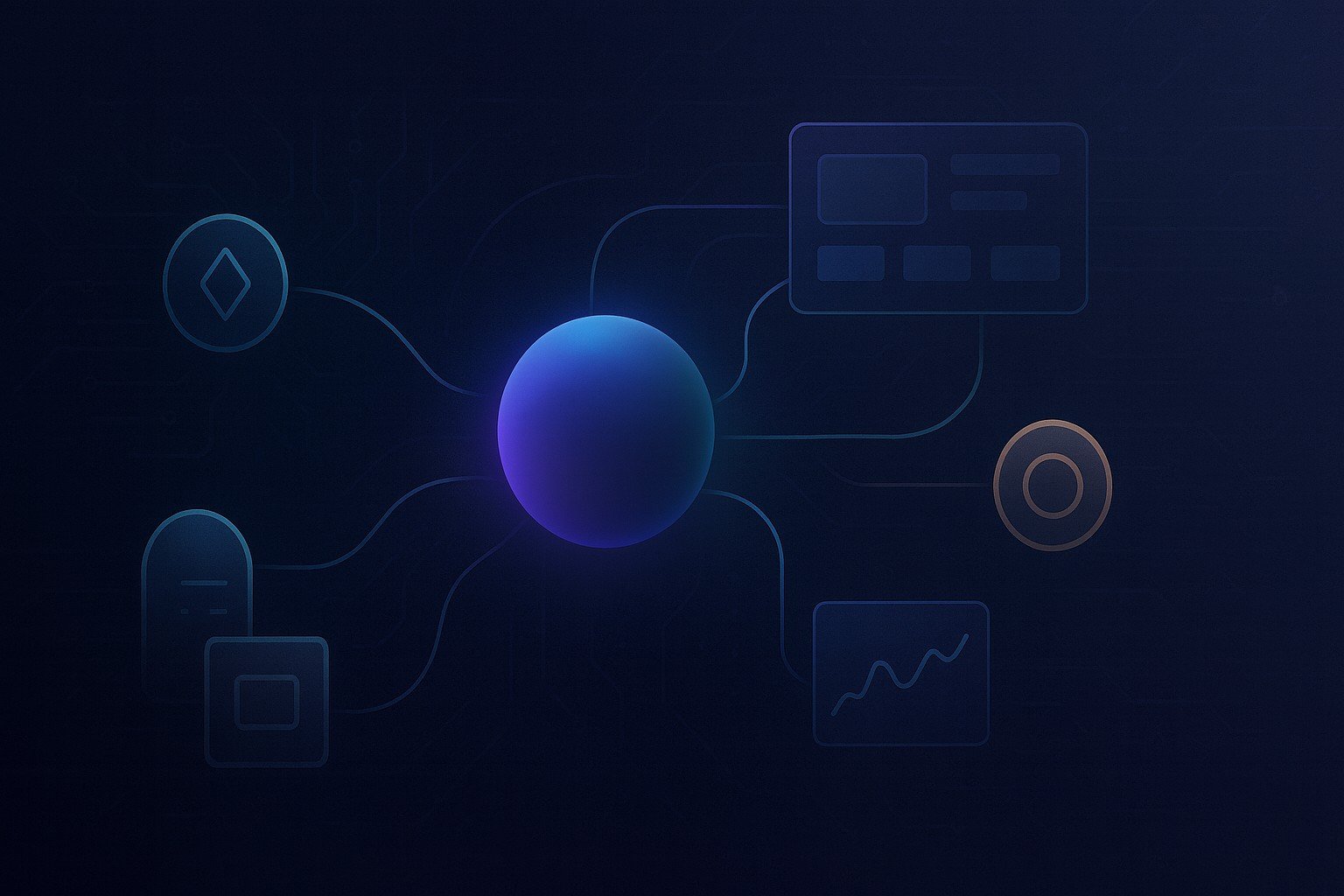
An AI agent functions on a continuous loop of perception, reasoning, and action. First, it perceives data from various sources: real-time market feeds, blockchain state, news aggregators, and social sentiment APIs. This data is fed into its reasoning engine, typically powered by a fine-tuned LLM or a specialized machine learning model.
The model analyzes this information against its programmed goals and risk tolerance. It then formulates an action plan. Crucially, the final step is autonomous execution. The agent cryptographically signs and broadcasts a transaction to the blockchain—whether it’s swapping tokens on a DEX, supplying liquidity to a lending pool, or placing a leveraged position on a perp DEX.
An AI agent’s power—and risk—comes from its ability to sign transactions. Never grant an unlimited spending allowance. Always use time-locked or single-purpose smart contract wallets for agent control.
Core Components of an Autonomous Agent
Every functional agent needs a reliable data pipeline for accurate perception. It requires a secure execution environment, often a non-custodial smart wallet where private keys are managed via secure enclaves. Finally, it needs a clear objective function—a quantifiable goal like “maximize risk-adjusted returns” or “maintain a specific liquidity position.” Without this, the agent has no direction.
How Traders and Investors Apply AI Agents
The most direct application is in automated strategy execution. Traders deploy agents to run complex, multi-legged strategies across spot and derivatives markets that would be impossible to monitor manually. This includes statistical arbitrage between DEXs, delta-neutral farming strategies, and trend-following algorithms that adjust parameters based on market volatility.
For long-term investors, agents act as automated portfolio rebalancers and yield optimizers. They can automatically harvest farming rewards, compound them into new positions, and shift allocations between blue-chip assets and higher-yield (but riskier) DeFi pools based on pre-set rules. This turns a static portfolio into a dynamic, income-generating system.
Benefits and Trade Offs
The primary benefit is relentless, emotionless execution. Agents don’t get greedy or fearful. They operate at a speed and scale unattainable for humans, capitalizing on micro-opportunities across the global crypto market 24/7. They also enable complex multi-protocol strategies that would be too cumbersome to manage manually.
The trade-off is a significant upfront complexity barrier. Designing, testing, and securing an agent requires deep knowledge in crypto, smart contracts, and AI. There’s also the inherent risk of delegation. You’re ceding control to software, which can act in unexpected ways if its training data is flawed or its objective function is poorly defined. The cost of computation and on-chain gas for frequent actions can also eat into profits.
Key Risks and How to Handle Them
Smart contract risk is amplified. Your agent is only as safe as the protocols it interacts with. A bug in a new yield farm could lead your agent to dump all its capital into a vulnerable contract. Mitigate this by strictly limiting the agent to well-audited, time-tested protocols, especially in its early deployment phase.
Model risk is unique to AI. The agent’s decision-making model can fail or be manipulated. Anomalous market conditions or “adversarial examples” in data feeds could trigger irrational behavior. Handling this requires robust simulation in a testnet environment, implementing hard-coded circuit breakers (like maximum position size or daily loss limits), and maintaining human oversight with alert systems for unusual activity.
How to Research or Evaluate AI Agents
Start by examining the agent’s track record in a transparent, verifiable way. On-chain analytics platforms are crucial here. Look for the agent’s public wallet address and audit its historical transaction history. Has it consistently achieved its stated goal? How does it perform during market drawdowns?
Scrutinize the technical architecture. Is it open-source? How does it handle private key security? What are its data sources, and can they be manipulated? For pre-built agents or platforms, assess the team’s credibility and the rigor of their security audits. Never allocate significant capital to an agent you don’t thoroughly understand.
Where This Could Go in the Future
The next evolution is multi-agent systems, where specialized agents collaborate. One agent might handle risk assessment, another executes trades, and a third manages treasury and gas optimization. We’ll also see the rise of agent-to-agent marketplaces, where you can rent the services of a high-performing trading agent or a specialized DeFi management agent for a fee.
Integration with Decentralized Physical Infrastructure Networks and Real World Assets is another frontier. Imagine an agent that automatically allocates capital between a crypto yield farm and a tokenized treasury bill pool based on real-time interest rate forecasts. The line between crypto finance and traditional finance will blur, managed by autonomous AI.
Conclusion
The automation of crypto finance is inevitable. AI agents in crypto are the vehicles for this transition, moving us from manual, intermittent management to continuous, algorithmic stewardship of on-chain assets. Their value lies not in replacing human judgment, but in impeccably executing the strategies and rules that judgment creates.
Success with this technology demands a blend of caution and curiosity. Start small, verify everything on-chain, and always maintain ultimate sovereignty over your capital. The agents work for you, not the other way around.
FAQ
What’s the difference between an AI crypto bot and an AI agent?
Traditional bots follow strict, pre-coded if-then rules. An AI agent incorporates a reasoning layer. It can interpret unstructured data (like news or social sentiment), adapt its strategy to new conditions, and make judgment calls within its defined goals. It’s more autonomous and flexible.
Are AI agents in DeFi safe to use?
Safety is not guaranteed and depends entirely on the agent’s design and your configuration. The risks are layered: smart contract risk from the protocols it uses, model risk from its AI, and custodial risk from how its wallet is secured. Safety comes from rigorous testing, using audited protocols, setting strict spending limits, and never giving an agent unlimited access to your main wallet.
Do I need to know how to code to use an AI agent?
To build one from scratch, absolutely. However, the ecosystem is developing no-code and low-code platforms where you can configure pre-built agents with dropdown menus and parameter sliders. For advanced, custom strategies, coding knowledge—or the budget to hire a developer—is still essential.