RWA Lending DeFi: A Complete Guide to On-Chain Private Credit
DeFi’s hunt for sustainable, uncorrelated yield has led it straight into the real world. The promise of RWA lending DeFi is simple: connect the massive, multi-trillion-dollar market for real-world debt with the global liquidity of decentralized finance. Instead of speculating on volatile crypto assets, these platforms let you earn yield backed by tangible assets like real estate, commercial invoices, and corporate loans.
This fusion creates a new type of fixed income market for crypto natives, while offering traditional businesses a novel source of capital. The mechanics, risks, and opportunities, however, are fundamentally different from the purely digital lending you might be used to.
What RWA Lending DeFi Means in 2026
In 2026, RWA lending DeFi has evolved from a niche experiment into a core infrastructure layer for private credit. It’s no longer just about wrapping a single property token. The space now features specialized platforms that underwrite, tokenize, and manage entire portfolios of real-world debt instruments on-chain.
The focus has shifted from simple collateralization to building full-stack credit markets. This means platforms handle origination, due diligence, legal structuring, and ongoing servicing of the loans. For lenders, this translates to access to asset classes previously reserved for institutional investors, with yields often generated from the real economy’s activity, not crypto market volatility.
How RWA Lending DeFi Actually Works
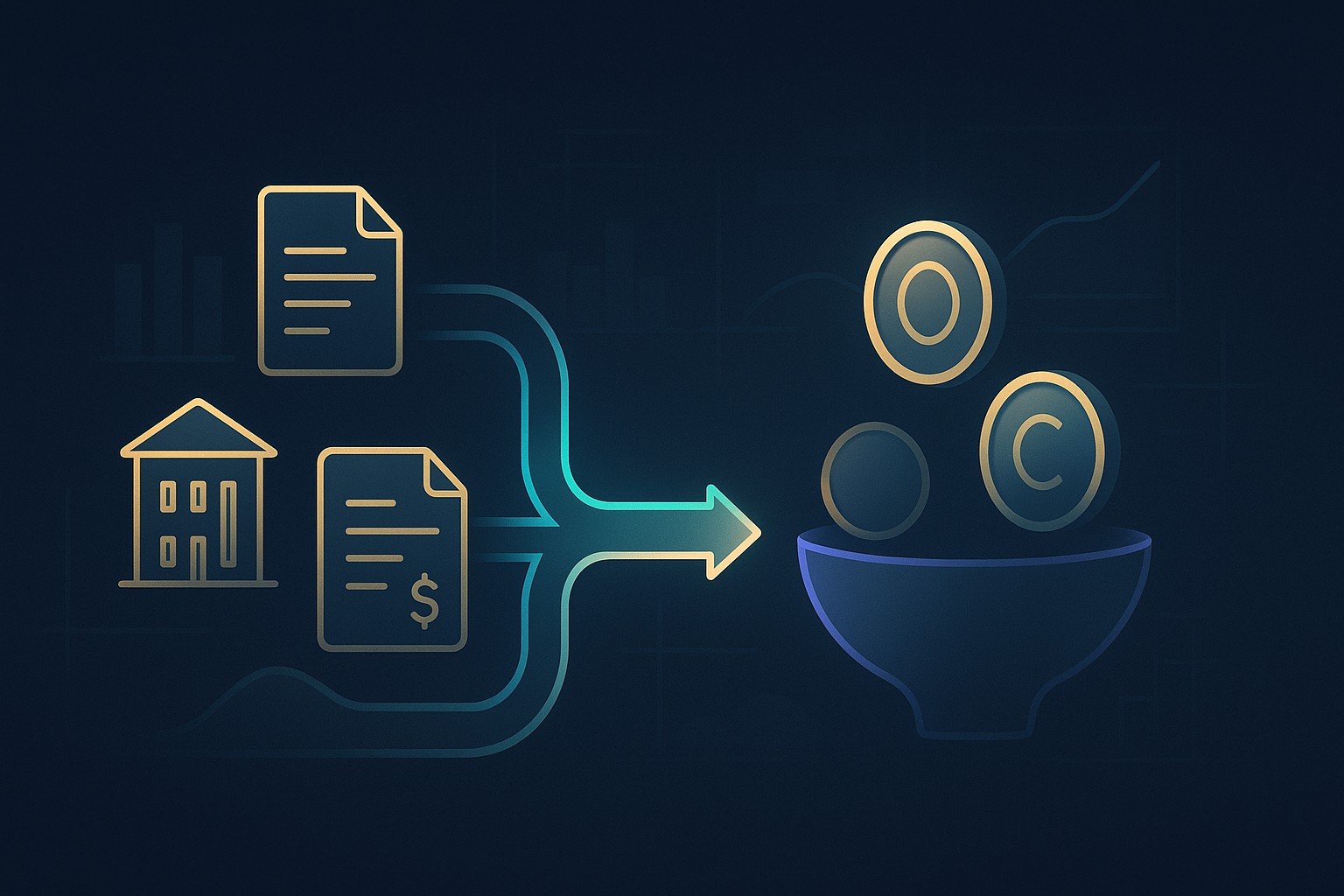
The process involves several key steps that bridge the off-chain and on-chain worlds. First, a platform or originator sources a real-world loan, such as a mortgage for a commercial building or a line of credit for a business. This loan is governed by traditional legal contracts.
Next, the platform creates a digital representation, or token, of the debt obligation. This is often done through a Special Purpose Vehicle (SPV) or a legal trust that holds the actual loan agreement. The tokens representing a share in this debt are then issued on a blockchain, typically as ERC-20 or similar standards.
The On-Chain Mechanics
These tokens are made available on a DeFi lending platform. As a lender, you deposit stablecoins like USDC into a pool that funds these tokenized loans. Your capital is deployed to purchase fractions of the debt tokens. In return, you receive a yield-bearing token that accrues interest as the underlying real-world borrower makes their payments.
The platform’s smart contracts automate the distribution of principal and interest payments from the borrower to all token holders. Oracles and attestation services are sometimes used to verify payment events on-chain, though much of the enforcement remains in the traditional legal realm.
The legal rights to the underlying asset are paramount. The blockchain token is merely a digital receipt; its value is entirely dependent on the enforceability of the off-chain loan contract.
How Traders / Investors / Users Apply RWA Lending DeFi
For crypto investors, this is primarily a yield play. You allocate a portion of your stablecoin portfolio to RWA lending pools seeking higher, steadier returns than native DeFi lending can offer. It’s treated as a fixed-income alternative within a broader crypto portfolio strategy.
Airdrop hunters and DeFi farmers participate by supplying liquidity to these nascent platforms, often earning both lending yield and platform governance tokens. Sophisticated users might analyze different RWA platforms based on their asset class focus, jurisdiction, and underwriting track record, building a diversified basket of real-world credit exposures.
Protocol treasuries and DAOs have become major users, deploying portions of their treasury reserves into RWA lending to generate low-risk yield. This provides a productive use for assets that would otherwise sit idle, funding real economic activity.
Benefits and Trade Offs
The primary benefit is yield sourced from the real economy. Returns are often fixed or floating based on traditional interest rates, providing a diversification away from crypto-native yields that rise and fall with market sentiment and protocol incentives. The underlying collateral—like real estate or equipment—has intrinsic value, offering a different risk profile.
The trade-off is complexity and opacity. You’re adding layers of off-chain legal risk, counterparty risk with the originator and servicer, and asset-specific risk. Liquidity is also a constraint; exiting a position before loan maturity might be difficult or require a secondary market discount, unlike instantly redeemable DeFi pool shares.
Yields, while attractive, are lower than high-risk DeFi farming because they reflect the lower risk premium of established real-world credit. You’re paying for stability with potentially lower absolute returns compared to the crypto risk frontier.
Key Risks and How to Handle Them
The central risk is off-chain default. If the real-world borrower doesn’t pay, your digital token may become worthless. Recovery depends on the originator’s legal ability to seize and liquidate the collateral, a process that is slow, expensive, and happens entirely off-chain. There is no smart contract that can automatically foreclose on a building.
Originator risk is critical. You must trust the platform to have performed rigorous due diligence, proper legal structuring, and ethical servicing. A failure in any of these roles can lead to total loss. There’s also regulatory risk, as governments are still defining how these tokenized securities are treated.
Always verify the legal claim. Know exactly what legal entity holds the loan and what jurisdiction governs it. The smart contract code is secondary to the strength of the off-chain legal framework.
Mitigation starts with intense platform due diligence. Research the team’s background in traditional finance and law. Examine their underwriting standards, historical default rates, and transparency on loan-level data. Diversify across multiple platforms and asset types. Never allocate more than you can afford to lock up for the loan’s duration, treating it as a term deposit rather than a liquid asset.
How to Research or Evaluate RWA Lending Platforms
Start with the asset class. Platforms specialize—some in US real estate, others in trade finance invoices or auto loans. Understand the specific risks of that sector. Then, audit the originator. Who are they? What’s their track record in that industry? Look for audited financials or verifiable proof of past performance.
Analyze the legal structure. The whitepaper or docs should clearly explain the SPV, the governing law, and the precise rights conferred to token holders. Vague language here is a major red flag. Scrutinize the loan-to-value ratios, borrower credit checks, and insurance policies for the collateral.
Finally, examine the on-chain component. Are the contracts audited? Is there a clear mechanism for payment flows? How transparent is the reporting? A good platform will provide regular, verifiable updates on loan performance, not just smart contract interactions.
Where This Could Go in the Future
The trajectory points toward greater fragmentation and specialization. We’ll see platforms dedicated solely to green energy project finance, medical equipment leasing, or small business loans in specific regions. This specialization allows for deeper expertise and better risk pricing.
Interoperability will become a challenge and an opportunity. Standards for tokenizing debt (like ERC-3643 or ERC-1400) may mature, allowing tokenized loans from one platform to be used as collateral in a generic lending protocol elsewhere in DeFi. This could create complex, cross-margined financial systems blending real-world and crypto-native assets.
The long-term vision is a fully integrated global credit market where capital flows seamlessly to its most productive real-world use, priced and governed by transparent, on-chain mechanisms. We’re in the early, infrastructural phase of that journey.
Conclusion
RWA lending DeFi represents a pragmatic evolution of decentralized finance, tethering yield to the productive economy. It offers a compelling value proposition for yield seekers and a novel funding rail for businesses, but it demands a hybrid mindset. Success requires understanding both smart contract risks and traditional credit analysis.
As the infrastructure matures, this sector could fundamentally reshape how private credit is originated and distributed, blurring the lines between Wall Street and crypto. For now, it remains a high-conviction, high-diligence corner of the market with unique potential.
FAQ
Is RWA lending DeFi safer than regular DeFi lending?
It’s different, not inherently safer. It swaps smart contract and oracle risks for off-chain legal and counterparty risks. Your safety depends entirely on the quality of the underlying real-world loan and the originator’s ability to enforce it. A well-structured RWA loan can be less volatile, but it carries its own set of complex, traditional financial risks.
What happens if the RWA lending platform shuts down?
This is a critical risk. The continuity of loan servicing and legal enforcement is paramount. Reputable platforms structure their deals so that the legal rights are held in a bankruptcy-remote vehicle (like an SPV) separate from the operating company. Always check the docs to see if your rights as a token holder are protected if the platform itself fails.
How liquid are my funds in an RWA lending pool?
Liquidity is typically low. Most pools fund specific loans with set maturities (e.g., 6 months, 2 years). Your capital is locked until the borrower repays. Some platforms are developing secondary markets for trading these tokenized loans, but expect limited liquidity and potential price discounts if you need to exit early.