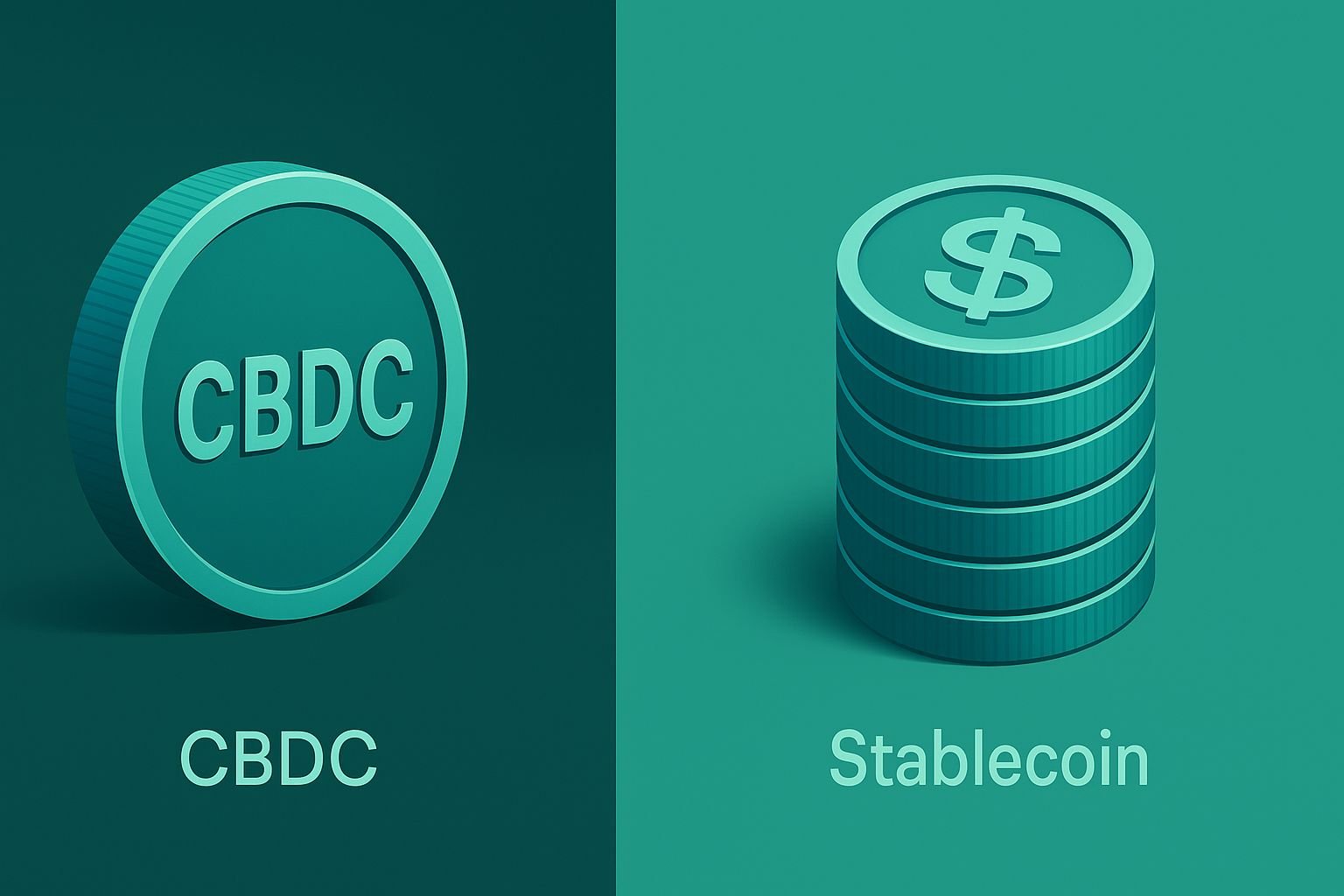
CBDC vs Stablecoin: The Battle for the Future of Digital Cash
The landscape of digital money is rapidly evolving, with two distinct models emerging as frontrunners. The choice between a cbdc vs stablecoin isn’t just about technology; it’s a fundamental debate about who controls the future of money. Understanding this distinction is critical for any participant in the digital economy.
While both aim to provide digital cash, their underlying philosophy, governance, and technical implementation create vastly different user experiences and societal implications. The coming years will see these two models compete, converge, and likely coexist.
What CBDC vs Stablecoin Means in 2026
By 2026, the contrast is sharper than ever. A Central Bank Digital Currency (CBDC) is a sovereign digital currency, a direct liability of a nation’s central bank. It’s digital fiat, with its value and issuance controlled entirely by the state.
Stablecoins are privately issued digital assets pegged to a reserve of assets, most often fiat currencies like the US dollar. They are liabilities of the issuing company or protocol, not the government. This core difference in issuer—public versus private—dictates nearly every other distinction.
How CBDCs and Stablecoins Actually Work
Technically, they operate on different rails with opposing priorities. A CBDC’s architecture is typically permissioned and centralized. The central bank maintains ultimate control over the ledger, transaction validation, and user access. This allows for features like programmable monetary policy and direct government disbursements.
Stablecoins, in contrast, are often built on public, permissionless blockchains like Ethereum or Solana. Their value is maintained through collateral reserves, algorithmic mechanisms, or a hybrid. Transparency of these reserves is a key trust factor for users.
A CBDC is state-controlled digital fiat; a stablecoin is a privately-issued, blockchain-based asset pegged to an underlying value.
Design and Infrastructure
The design goals diverge significantly. CBDCs prioritize monetary sovereignty, financial stability, and regulatory compliance above all else. Their infrastructure is built for control and oversight.
Stablecoins prioritize interoperability, global accessibility, and seamless integration with decentralized finance (DeFi) applications. Their infrastructure is built for speed, low cost, and programmability within the crypto ecosystem.
How Traders and Investors Apply CBDC vs Stablecoin
For market participants, the use cases are distinct. Stablecoins are the lifeblood of crypto trading and DeFi. They serve as a stable on-ramp, a trading pair for volatile assets, and collateral for lending and borrowing protocols. Their 24/7 global availability is indispensable.
A retail CBDC would function more like a digital bank account or cash. Its primary use would be for everyday payments, salary deposits, and tax transactions. For investors, a CBDC could become a new tool for treasury management or a vehicle for holding sovereign digital assets, but it’s unlikely to replace stablecoins’ role in speculative or yield-generating activities.
Benefits and Trade Offs
Each model offers unique advantages. CBDCs promise enhanced payment system efficiency, reduced costs for cross-border transactions (if designed interoperably), and powerful new tools for implementing fiscal and monetary policy. They could also promote financial inclusion by providing state-backed digital accounts.
Stablecoins offer censorship resistance, global permissionless access, and deep integration with a burgeoning open financial system. They enable financial innovation at a pace impossible within traditional or CBDC frameworks.
The trade-off is stark: CBDCs offer stability and legitimacy at the cost of privacy and freedom. Stablecoins offer freedom and innovation at the cost of regulatory uncertainty and counterparty risk from the issuer.
Key Risks and How to Handle Them
Privacy and Surveillance
The most significant risk with a CBDC is financial surveillance. A fully traceable digital currency gives the state unprecedented visibility into all economic activity. Mitigation requires advocating for and using privacy-preserving designs, though many governments may resist.
Counterparty and De-Peg Risk
The primary risk for stablecoins is a loss of the peg. This can happen if the issuer’s reserves are inadequate, fraudulent, or frozen. Handling this risk involves rigorous due diligence: using only transparent, well-audited, and highly liquid stablecoins like USDC, and understanding the legal claims (if any) you have on the underlying assets.
Always verify the attestations and audit reports of a stablecoin’s reserves. For CBDCs, scrutinize the proposed privacy and programmability features in white papers or legislation.
Disintermediation and Financial Stability
A rapid shift from bank deposits to CBDCs could destabilize the traditional banking system. For stablecoins, regulatory crackdowns or restrictive legislation pose an existential threat. Diversification across asset types and jurisdictions is a prudent defensive strategy.
How to Research or Evaluate CBDC vs Stablecoin
Evaluating a CBDC project requires analyzing its technical design documents and policy papers. Key questions: Is it retail or wholesale? What privacy technology is proposed (if any)? Is it account-based or token-based? How does it handle offline payments?
For stablecoins, research is more market-driven. Scrutinize the issuer’s monthly reserve attestations from top-tier audit firms. Analyze the composition of reserves—are they cash and short-term Treasuries, or riskier commercial paper? Review the legal terms of service to understand your rights. Monitor regulatory sentiment, especially around stablecoin regulation 2026 proposals.
Where This Could Go in the Future
The future is likely hybrid, not a winner-take-all scenario. We may see a two-tiered system where central bank digital currency operates at the wholesale and regulatory layer, while private stablecoins and tokenized assets serve as the primary medium for retail and commercial innovation.
Regulation will be the defining force. The outcome of the cbdc vs stablecoin dynamic hinges on whether governments choose to stifle private alternatives or create a regulated framework that allows them to thrive alongside sovereign digital money. Interoperability between these systems could unlock powerful new financial architectures.
Conclusion
The divide between a CBDC and a stablecoin represents a core tension in the future of finance: centralized control versus decentralized innovation. One offers the full faith and credit of the state; the other offers the open, programmable utility of the blockchain.
For users and builders, the savvy approach is to understand the distinct roles each will play. The cbdc vs stablecoin debate isn’t about picking a side, but about navigating a financial ecosystem where both will exist, each serving different needs with different trade-offs.
FAQ
Could a CBDC replace stablecoins like USDC?
It’s unlikely in the near term. A CBDC and USDC serve different purposes. A US CBDC would be a direct digital dollar for payments, potentially with strict controls. USDC is a tool for the crypto economy, enabling trading, DeFi, and global settlements on public blockchains. They are more likely to coexist, with regulation defining their boundaries.
Which is better for privacy: CBDC or stablecoin?
On public blockchains, certain stablecoin transactions offer more pseudonymity than a typical CBDC design, which is expected to have full KYC and transaction monitoring. However, privacy-focused CBDC research exists, and privacy-enhancing technologies for public blockchains are also evolving. Currently, stablecoins on transparent ledgers offer more transactional privacy than most proposed CBDC models.
How will regulation in 2026 affect stablecoins?
2026 is expected to bring clearer regulatory frameworks in major jurisdictions like the US and EU. This will likely mandate stricter reserve requirements, redemption guarantees, and issuer licensing. This regulation will legitimize the sector but may consolidate power among a few large, compliant issuers, potentially reducing innovation from smaller, decentralized stablecoin projects.